About this tool
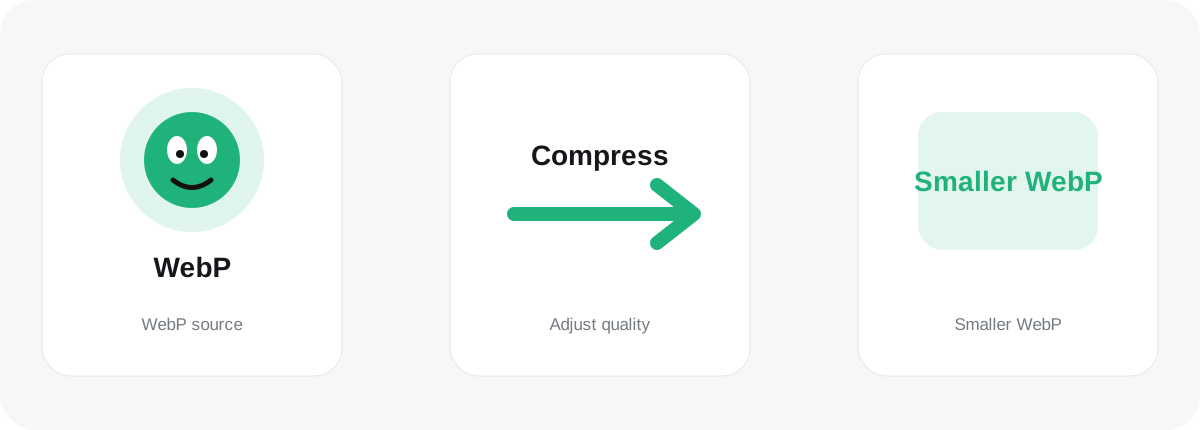
WebP is designed for efficient web image delivery and can support both lossy compression and transparency. Compress WebP is for situations where the source is already WebP but the current file is still larger than needed. Instead of converting back to an older format, the page re-encodes the image as WebP using the quality setting you choose.
How it works
This is particularly useful for website photographs, product imagery, blog illustrations and landing-page assets that are already part of a modern web workflow. A lower quality value can reduce transfer size, while a higher value retains more fine detail. Because WebP compression is content-dependent, the generated file-size result is a better guide than the slider number by itself.
What affects the result
Modern browsers handle WebP well, but the format is still primarily a delivery format. If the image needs to be opened in older desktop software or submitted to a JPG-only portal, WebP to JPG may be the correct workflow instead. If transparency must be preserved for editing, WebP to PNG can be useful despite the larger output.
When to use it
Compression should also be considered alongside pixel dimensions. Re-encoding a 5000-pixel image at a lower quality may still leave a file that is larger than necessary for a 1000-pixel website slot. In those cases, resize first and then compare compression. The goal is to send only the image information the destination actually needs.
Best practice
Keep the original source image when possible. WebP re-encoding cannot recover information that has already been discarded by earlier lossy compression. Use this page to create practical delivery copies, compare the generated size and visual appearance, and avoid repeatedly compressing the same derivative file across multiple generations.
Should I keep WebP or switch formats?
If the image is being delivered on a modern website, keeping WebP is usually sensible because it was designed for efficient browser delivery. Switching to JPG may improve compatibility with older tools, but it can increase file size or remove transparency. Switching to PNG can preserve transparency in an editing-friendly format but may produce a much larger file. The best choice depends on where the image will be used after download, so format compatibility should be considered alongside compression size. For production websites, compare the compressed WebP visually and keep an original master so you can generate another version later.
Practical workflow tip
WebP output can also behave differently depending on whether the source contains transparency. Transparent assets should be checked against the actual background where they will appear, because edge softness and compression artifacts are easier to notice around cutout objects. For web publishing, test the final file in the browser at the intended display size instead of judging only a zoomed preview.